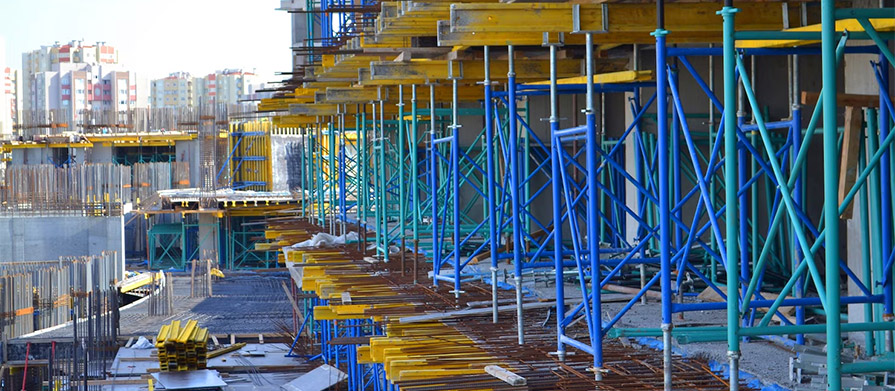
Sugar plants work under the conditions when constant production, accurate working of equipment, and safety of processes are essential.
Quality Inspection Reports
In industrial engineering, quality inspection reports are more than paperwork. They provide proof that materials, fabrication, and installation have been executed correctly. They give confidence to clients, project teams, and future operators that work has been reviewed, checked, and approved at every critical stage.
At Creative Engineers, we treat quality inspection reports as an operational tool that strengthens transparency, accountability, and long-term reliability across mechanical, civil, and FRP projects.
What do the Quality Inspection Reports signify?
The investigation report documents what has been checked, in what way and whether it has fulfilled the requirements. It also connects physical activity at the shop floor or the site to drawings, standards and contractual requirements.
In practice, our inspection reports confirm material specifications, tolerance compliance, weld acceptance, and correct installation. They are a factual record of verification—not an opinion.
Importance of Inspection Reports in Industrial Projects
Industrial systems usually work under load, pressure, vibration, or under a corrosive environment. One single massive error is hardly the cause of system failure. More frequently, they are caused by minor, uninhibited diviations which build up with time.
Our inspection reporting helps identify these deviations early, so issues are corrected before they escalate. This reduces rework, prevents downstream complications, and supports safety and performance across the full project cycle.
Inspections Across Multiple Stages of Work
Quality inspection is not a single end-stage activity. At Creative Engineers, our engineers conduct and document inspections across key stages, including:
Inbound material inspection.
Checks on fabrication in process.
Dimensional and visual examination.
Installation and fitment inspection.
Final acceptance inspection.
Each stage is recorded through inspection reports, creating a clear, traceable history of what met requirements and what required correction.
Material and Dimensional Checking
Our inspection reports commonly cover material grade, size, thickness, and surface condition to confirm materials match approved specifications and design requirements.
Dimensional checks verify fabricated parts stay within drawing tolerances. Calibrated instruments are used to measure. Our records ensure that there is confirmation on the parts that will fit and work as per the required expectations during assembly and usage.
Weld and Fabrication Inspection
When welding is carried out, inspection reports report on weld appearance, joint preparation and adherence to accepted procedures. Visual examination is usually performed to identify defects on the surface like cracks, undercut, or incomplete fusion.
In structural fabrication, as well as in mechanical fabrication, alignment, fit-up, and accuracy of assembly is also checked in reports of inspection. These checks support load transfer integrity and long-term system stability.
Installation and Site Inspection
Site inspection reports confirm components have been installed safely and correctly. This includes checks for alignment, anchoring, bolting, and required clearances.
Our engineers ensure installation matches approved drawings and method statements. Any deviations are recorded, corrected, and verified before acceptance – supporting safer operation and maintenance in the future..
EPC and Client Acceptance Role
In EPC and large industrial projects, inspection reports play a direct role in client acceptance. They provide evidence that work aligns with specifications and quality plans.
Our inspection approach enables stage-wise approvals, billing, and end-of-handover. Clear reports minimize conflicts and assist projects to be on schedule without delays due to ambiguous quality status.
Supporting Traceability and Compliance
Close to material traceability and quality control systems are inspection reports. They use material certificates, drawings, and inspection criteria and produce a linked quality record.
This connection facilitates audits and regulatory compliance where necessary. It also makes sure that the information is available even when the project is over.
Managing Non-Conformances
Acceptance is not always the outcome of inspections. In case of non-conformances, inspection reports record the problem, correction and ultimate solution.
Such a formalized system at Creative Engineers guarantees that issues are dealt in a systematic way other than in an informal manner. Before work is done, corrective measures are taken,thus ensuring quality outcomes are under control.
Documentation and Record Keeping
The inspection reports are arranged under the general quality documentation package. Reports are dated, referenced, and kept in such a way that they can be easily retrieved.
Good record management also ensures that information is readily accessible for audits, maintenance planning or modification in the future. It also facilitates knowledge transfer across different phases of the project.
Long-Term Value of Inspection Reports
Inspection reports remain valuable beyond project completion. They give an idea of the way systems were constructed and tested.
These records are useful during maintenance or refurbishment since the engineers may know the quality of construction during its first construction and make decisions based on this information. It is a long term value that is very crucial in terms of asset management.
Why Choose Us?
To the clients, our inspection reports are important since they are precise, understandable, and conforming to requirements of the project. We dwell on making it, and we mean what we have.
Our strategy guarantees inspection reports facilitate execution and not slow down the execution. We give assurance that work is done in the right way and in a responsible manner.
Frequently Asked Questions
What is a quality inspection report?
It is a written record confirming work has been checked and meets the specified quality requirements.
What are the levels of inspections conducted?
Inspection is done at all stages – receiving materials, fabrication, installation and final acceptance.
Who uses inspection reports?
Clients, EPC teams, inspectors and maintenance staff.
What are the benefits of inspection reports on audits?
They offer observable integrity and quality assurance even after project completion.
Do inspection reports become helpful once a project is completed?
Yes, they help in maintenance, refurbishment and asset management.
Your Trusted Partner in Industrial Fabrication.
Lorem ipsum dolor sit amet, consectetur adipiscing elit. Sed do eiusmod tempor incididunt ut labore et dolore magna aliqua. Ut enim ad minim veniam, quis nostrud exercitation ullamco laboris nisi ut.